

If you run a Shopify store, chances are most of your marketing budget goes toward getting people to your site — ads, SEO, influencer partnerships, email campaigns. But here's the uncomfortable truth: traffic without conversion is just expensive window shopping.
Two levers quietly decide whether that traffic turns into revenue: Conversion Rate Optimization (CRO) and site speed optimization. Together, they determine how much of the traffic you've already paid for actually converts — without spending an extra rupee or dollar on ads.
This guide breaks down why both matter, how they apply across different product categories, and what tangible business benefits you can expect when you get them right.
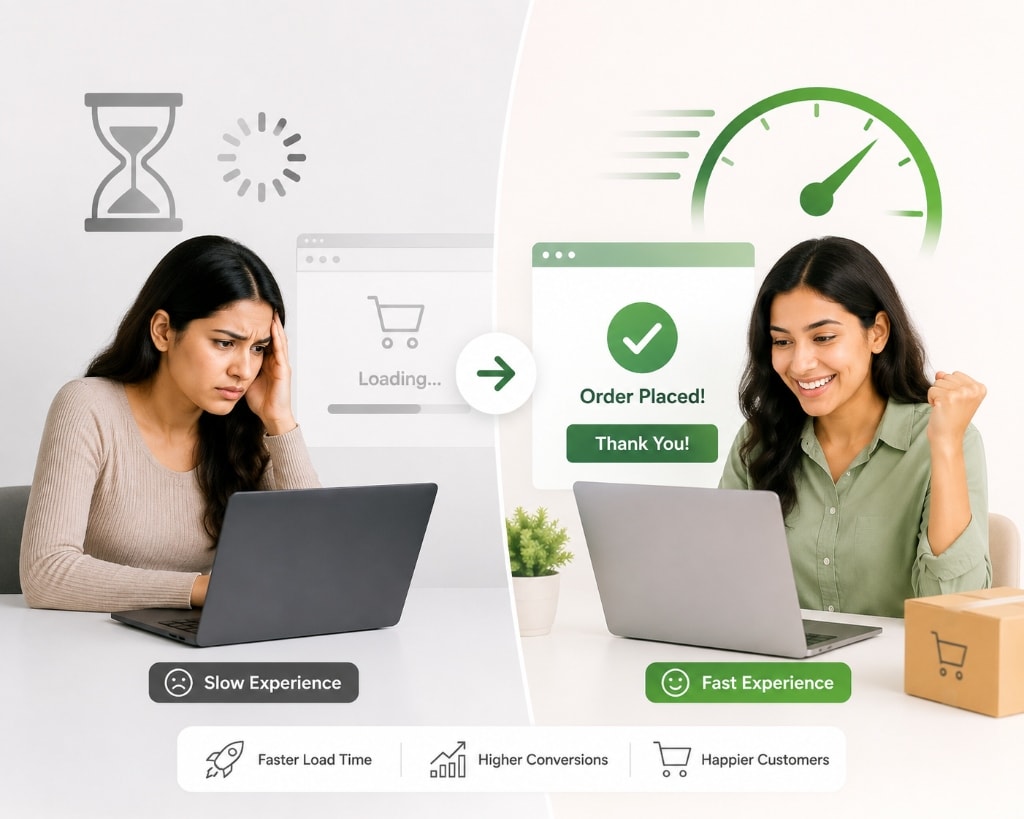
Bounce probability climbs sharply when load times increase from 1s to 5s.
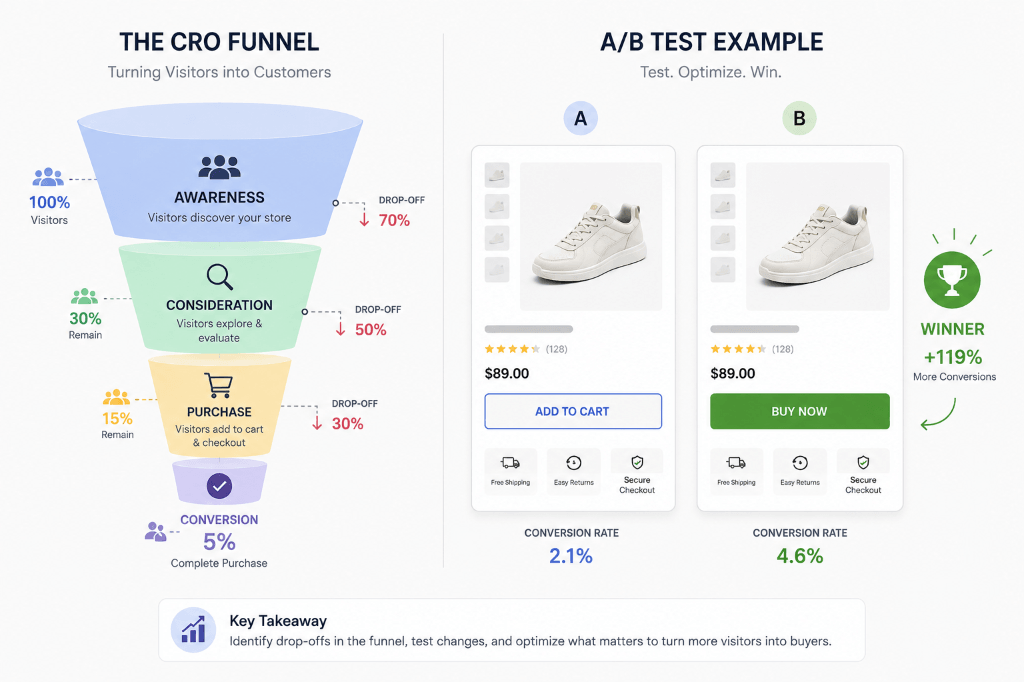
Lifting CVR from 1.5% to 2.0% yields 250 extra orders/mo per 50k visitors.
Higher conversion directly lowers effective customer acquisition costs.
What Is CRO, Really?
Conversion Rate Optimization (CRO) is the systematic process of increasing the percentage of visitors who take a desired action on your store — buying a product, adding to cart, signing up for an email list, or completing checkout.
CRO isn't about redesigning your whole store on a hunch or guessing what looks trendy. It's about measuring and testing specific friction points:
- Product detail page clarity and visual hierarchy
- Checkout flow speed, field count, and payment accessibility
- Trust signals (guarantees, reviews, secure badges, transparent policies)
- Clear, action-oriented CTAs placed at the exact moment of shopper intent
What Is Speed Optimization?
Speed optimization is making your store load as fast as humanly possible — across both mobile devices and desktop browsers. Key engineering aspects include:
- Image compression and responsive srcset: Serving next-gen formats (WebP/AVIF) with proper dimensions and lazy loading.
- App and script rationalization: Eliminating unused JavaScript bundles, tracking pixels, and zombie apps.
- Efficient theme architecture: Minimizing render-blocking resources and critical CSS path.
- CDN caching and edge delivery: Leveraging Shopify's global CDN infrastructure.
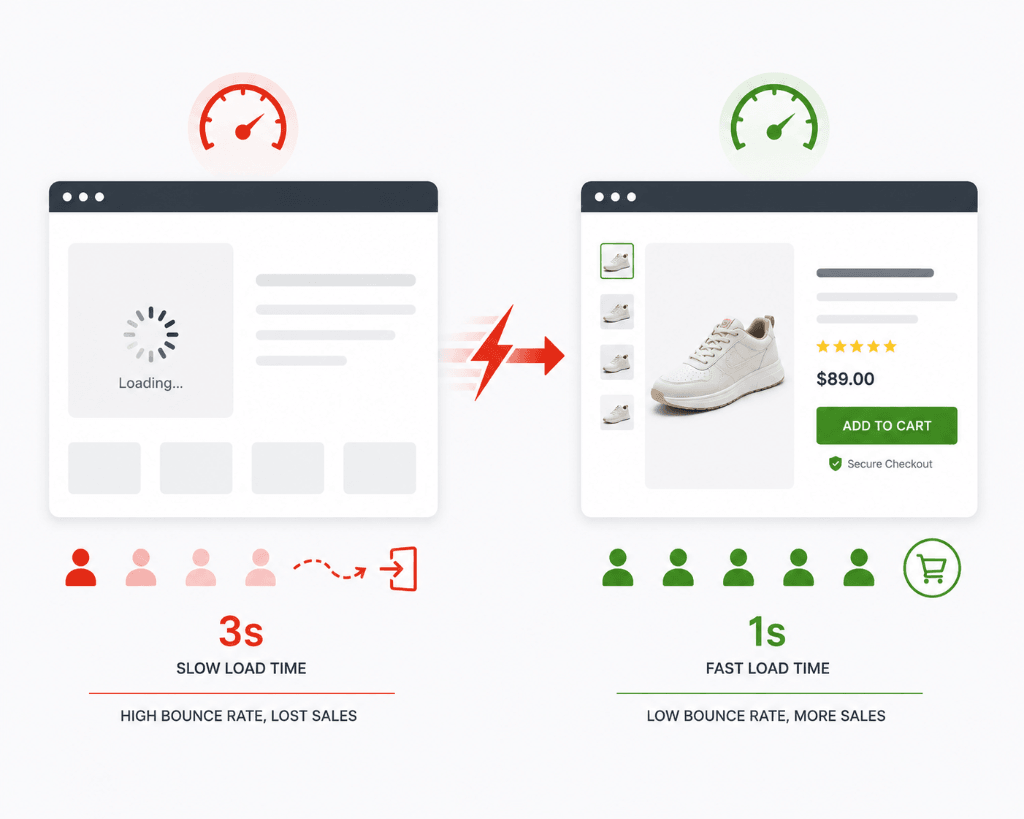
A landmark Google/SOASTA study analyzing over 900,000 mobile ad landing pages found that as load time increases from 1 to 3 seconds, the probability of a mobile visitor bouncing rises by 32% — and climbs to 90% at 5 seconds. On mobile, where a large share of Shopify traffic originates, this effect is especially costly.
Why CRO and Speed Matter Together
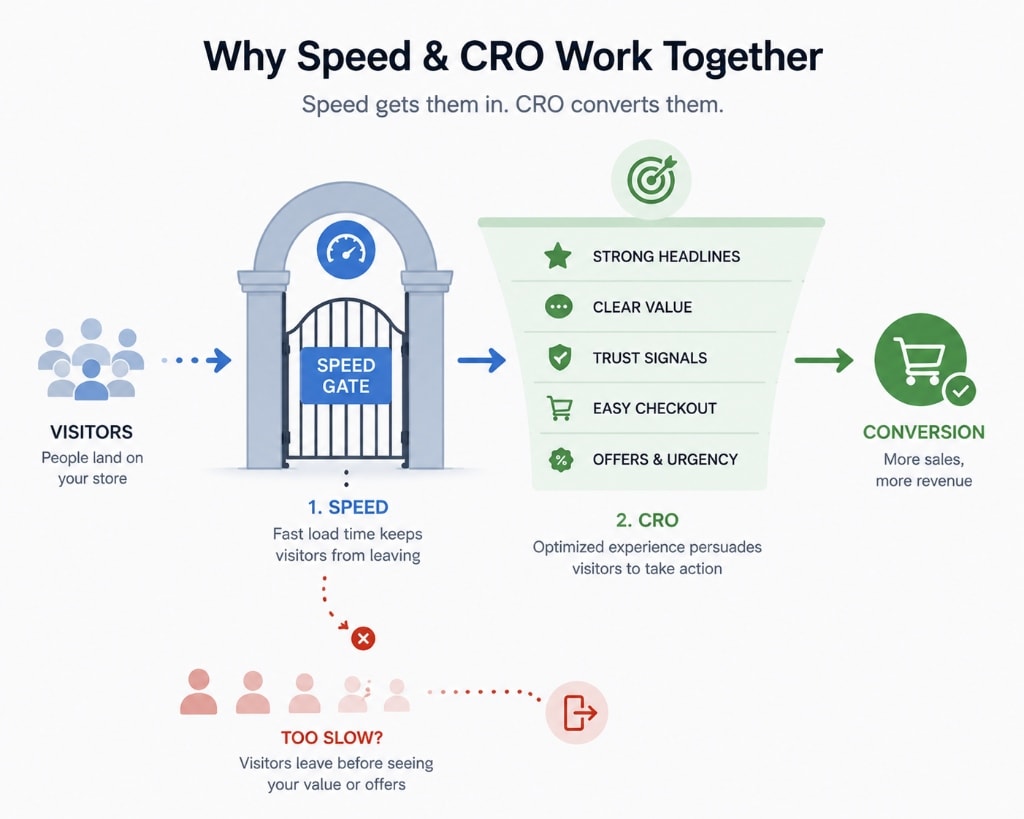
Speed and conversion are deeply linked — think of speed as the gatekeeper and CRO as the persuader.
- Fast site + poor CRO: Visitors arrive smoothly but drop off due to confusion, missing trust signals, or high-friction checkout.
- Great CRO + slow site: Your persuasive copy, verified reviews, and offers are never seen because the shopper bounced before the page rendered.
You need both working in tandem to turn ad spend and organic traffic into profitable bottom-line revenue.
Core Benefits of CRO + Speed Optimization
The Mathematical Impact
Say a Shopify store receives 50,000 monthly visitors and converts at 1.5% — that equals 750 orders.
If targeted CRO and speed optimizations lift the conversion rate to just 2.0%, the exact same traffic produces 1,000 orders.
Why Shopify Stores Face Unique Challenges
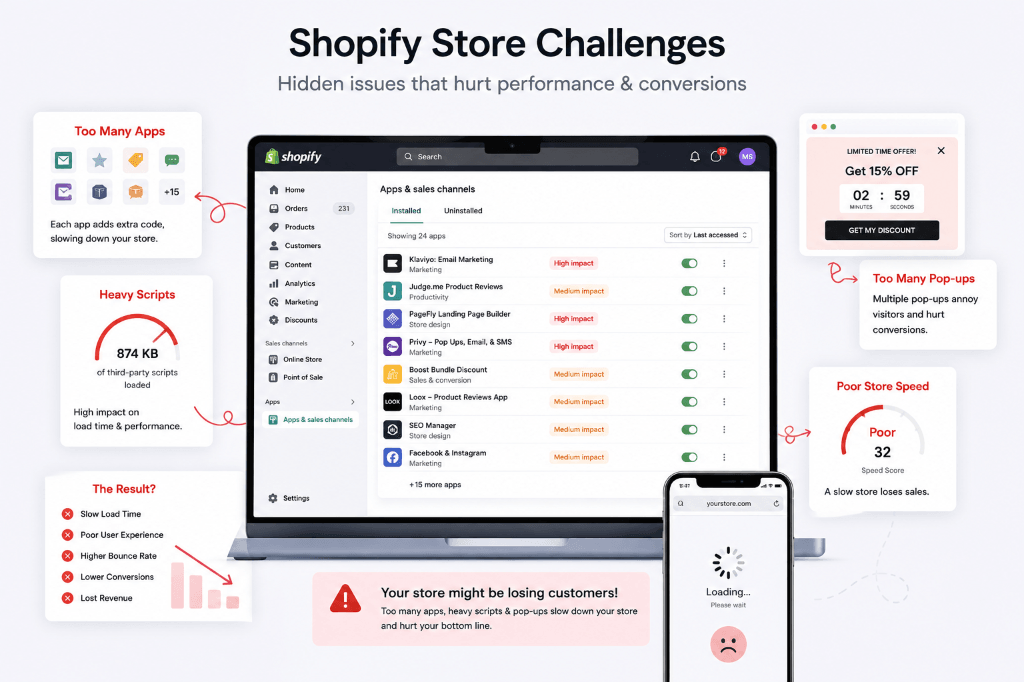
Shopify makes launching a store fast and accessible. But the exact flexibility that makes it powerful (themes, apps, tracking pixels, review widgets, pop-ups, upsell plugins) is what quietly causes technical debt:
- Multiple third-party apps injecting uncoordinated client-side JavaScript
- Heavy tracking pixel bloat across advertising networks
- Unoptimized, uncompressed high-resolution product photography
- Bloated legacy theme code containing obsolete Liquid snippets
- Overlapping pop-ups and modals competing for attention and triggering layout shifts
- Cluttered visual hierarchy where secondary elements distract from the primary Buy button
Category-Wise Strategies: How CRO & Speed Apply Differently
CRO is not one-size-fits-all. What converts a fashion buyer is fundamentally different from what converts an electronics or supplement customer.
1. Fashion & Apparel
Core Conversion Problem: Size, fit, and material uncertainty.
Speed Challenges: High-resolution lifestyle photography, variant lookbooks, and video swatches.
High-Impact CRO Tactics:
- Interactive size guides and virtual fit recommendation tools
- User-generated content (UGC) and real customer photos placed directly beside the buy button
- Low-stock urgency badges (“Only 2 left in Size M”)
- Prominent, risk-free exchange & return policy above the fold
2. Beauty & Skincare
Core Conversion Problem: Skepticism over skin/hair type compatibility and authenticity.
Speed Challenges: Long ingredient breakdowns, high-res zoomable textures, and video demos.
High-Impact CRO Tactics:
- AI-guided skincare quizzes routing shoppers to the exact match for their skin concern
- Clinically verified review badges and Before/After visual comparisons
- Seamless subscribe-and-save replenish options for recurring consumables
- Transparent ingredient glossaries highlighting clean or certified formulations
3. Electronics & Gadgets
Core Conversion Problem: Technical comparison shopping and specification doubt.
Speed Challenges: Heavy comparison tables, spec sheets, downloadable manuals, and 3D embeds.
High-Impact CRO Tactics:
- Side-by-side product comparison charts
- Warranty and after-sales customer support information positioned above the fold
- Technical objection-handling FAQ accordions near checkout
- 1-click accessory bundling (device + case + fast charger)
4. Food & Beverage
Core Conversion Problem: Fast, low-consideration impulse buying that stalls at any friction.
Speed Challenges: Dynamic subscription logic, nutritional data tables, and seasonal banners.
High-Impact CRO Tactics:
- Dietary filter tags (Vegan, Keto, Gluten-Free, Organic)
- Clear recurring subscription discounts and delivery frequency toggles
- Taste guarantees and freshness badges near the primary CTA
- Dynamic box builders allowing custom bundle creation in under 30 seconds
5. Home & Furniture
Core Conversion Problem: High ticket hesitation — dimension, room fit, and delivery fears.
Speed Challenges: Massive multi-angle images, 360° spinners, and AR room visualizers.
High-Impact CRO Tactics:
- Interactive room visualizer and AR placement tools
- Precise dimension schematics with scale references
- Early display of flexible financing / EMI options
- Transparent delivery timelines and white-glove assembly disclosures
6. Health & Wellness Supplements
Core Conversion Problem: Skepticism regarding efficacy, purity, and safety claims.
Speed Challenges: Certificate of Analysis (COA) PDFs, regulatory badges, and video testimonials.
High-Impact CRO Tactics:
- Third-party lab test certifications and purity badges visible near CTA
- Doctor, nutritionist, or clinical expert endorsements
- Dosage and timing guides simplifying everyday consumption
- Subscription flexibility allowing 1-click pauses and flavor swaps
Quick Wins You Can Implement on Shopify This Week
Final Thoughts
CRO and speed optimization aren't cosmetic “nice to have” improvements — they are the architectural foundation that decides whether your customer acquisition spend generates profit or loss. A gorgeous store that loads slowly, or a fast store that fails to guide visitor intent, will leak revenue every single day.
The winning Shopify brands of 2026 are rarely the ones spending the most on ads — they are the ones converting the highest percentage of the traffic they already own.
Start with speed as the baseline, layer in category-tailored conversion patterns, and continuously measure your funnel.
Want to know where your Shopify store is losing conversions?
Schedule a technical CRO and performance audit with Aimbrill. We identify speed bottlenecks, UX friction, and missed AOV opportunities — then prioritize the fixes with the highest revenue impact.